

After a long-term hiatus, our website is back—and we’re starting with an inspiring story from one of our volunteers. Meet Anna, our long-term ESC volunteer from Germany, who spent one year in Nagyvázsony, Hungary, supporting local schools, youth work, and community life from September 2024 to August 2025.
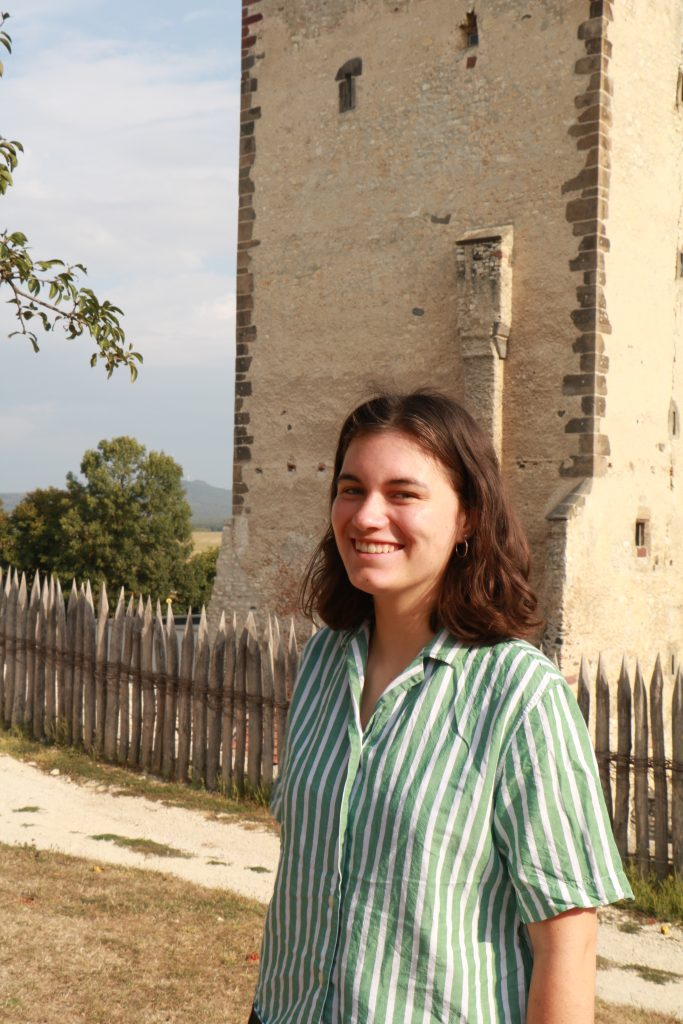
Every year, we host a volunteer from Germany who assists in the local school in Nagyvázsony and in the schools of Balatonfüred. In our region, German is one of the most commonly taught foreign languages, which is why native German speakers play an especially valuable role.
Anna is 22 years old and comes from a small town near Hamburg. She loves purple, reading books, baking, dancing, and teaching children. Maybe that’s exactly why she chose Nagyvázsony and our project. Let’s hear her story.
Why I Chose to Volunteer Abroad
-Why did you decide to become a volunteer?
It was winter, and I had to study for my exams. That was the moment I realised that my next step should be an adventure.
-Why Hungary—and why Nagyvázsony?
At first, I wanted to go to Spain to improve my language skills. Later, I started considering Eastern Europe because I enjoy discovering new places. In the end, this project convinced me because I want to become a teacher.
Finding the Right ESC Project
-How did you find our organisation and project?
I found my sending organisation, ijgd, online. During a Zoom call, they introduced different partner projects with the help of former volunteers. Janika, who had once volunteered in Nagyvázsony, presented this project—and that’s how I first heard about Fekete Sereg.
-What attracted you to the project?
First of all, the light in Janika’s eyes when she talked about Nagyvázsony. I also found a lot of convincing information about Fekete Sereg online. Since I want to become a teacher, this project was perfect for gaining practical experience. Even though Nagyvázsony is a small village (which was my biggest fear), it was clear that volunteers are never alone here.
Application and First Contact
-Do you remember what was in your motivation letter?
My name, for sure. 😄
-How did the first communication go?
Melinda, the German teacher, interviewed me in German. After that, I waited four weeks for an answer and was convinced they had forgotten about me. When Rita finally wrote that Fekete Sereg would like to host me, I was happy—and scared—at the same time.
Most of my questions were answered through the Fekete Sereg Padlet and the info pack. I also spoke with Fiona, the German volunteer before me. My sending organisation supported me a lot, especially with insurance, and hosted a very helpful pre-departure training in Berlin.
First Impressions After Arrival
-How did the village and the project meet your expectations?
I was surprised by how well Hungary’s public transport works and how well Nagyvázsony is connected to Veszprém. I was also glad to see that the village has shops, even though prices are quite high.
An excavation camp started right when I arrived, which helped me get to know both the village and other volunteers. Together, we visited Balaton, Veszprém, and Budapest.
Adjusting to the schools took longer than expected. I worked with more than five teachers and over 15 different student groups. Each school, teacher, and group was different—it took several months to feel fully settled.
Life as an ESC Volunteer
-Did you have ESC trainings?
Yes. My on-arrival training took place in Budapest just two weeks after I arrived, and my mid-term training was held in Visegrád. Great people, great program.
-What did your daily work look like?
On Mondays and Tuesdays, I helped in the German classes at the school in Nagyvázsony. I helped students memorise poems and talk in German in the hallway. During classes, I explained tasks and games. During breaks, I played with the students.
On Wednesdays and Thursdays, I went to Balatonfüred, where I also assisted in language classes. I contributed my own ideas to the lessons and to the theatre class. There was always a lot to do.
On Friday afternoons, I was at the youth center. There, I worked on my Hungarian, hung out with local youth and volunteers, and prepared a treasure hunt for short-term volunteers. In spring, I started a running club for local teenagers. In summer, I made some useful videos for future volunteers.
The Most Memorable Moments
When I think of Nagyvázsony now, I think of the most everyday situations, the people, and the house.
Cleaning the living room with Aleks, the smell of vinegar, and him saying that we are “toxic” (or was it the vinegar?). Having instant coffee with Lena in the morning while sharing great conversations that almost made me miss my bus to Füred. Making crêpes with Louis or going somewhere in his fast car. Having big discussions while playing Durak with all of them. Dancing with Sarah. Practicing Hungarian with Virág and Dani in the youth center. Chatting with our neighbors on the porch. Joining Rita at youth work events—we only understood anything thanks to her translations. Entering the school and being welcomed with a friendly “Szia Anna.” Buying almost the whole Tesco when Melinda took me there. And many more…
Challenges and Growth
Some things turned out to be easier than I expected, while others challenged me more than I had imagined.
What was easy for me:
Hungarian (just kidding). Keeping my Duolingo streak was easy, though.
Ordering a bus ticket after Dani explained what to say: “huszonöt év állati”
Meeting new people
What I found difficult (from “I can handle this” to truly challenging):
Pronouncing Nagyvázsony
Turning on the gas stove and gas oven for the first time
Ordering a bus ticket before Dani explained what to say
Not eating German bread
Coping with the dry summer heat and my pollen allergy
Sharing my room and having little privacy
How Volunteering Shaped my Future
I became aware of many of my privileges and learned to appreciate “simple” things I had taken for granted before. In general, I became more open-minded and accepting toward other people and myself. I’m also more confident and calmer in stressful situations. When I face a challenge now, I remind myself that I volunteered in Nagyvázsony for one year.
Now I’m doing another volunteering project and still want to become a teacher, so my project definitely shaped my choices and wishes. I worked closely with Melinda, who became a great role model for me as a future teacher.
I always looked up to Rita, too. She accompanies young people from different countries, connects them with each other, and gives them the opportunity to volunteer abroad. Let’s see—maybe one day I’ll open my own organisation. Meeting many young people from different countries also inspired me. All the people I met followed their own paths—something that often takes a lot of courage.
Would You Recommend a Long-Term ESC?
No. Just kidding.
Yes—absolutely. It can be hard, but if you want it, you can do it. And you will make a difference.
Final Tips for Future Volunteers
Bring earplugs!
Hide a roll of toilet paper in your closet.
Let Nagyvázsony surprise you.
Thank you for the interview. Thank you to everyone who accompanied me on my ESC journey ❤️
👉 Interested in becoming a volunteer in Nagyvázsony?
Check out our Padlet page for the latest updates and open calls.